
When is the best time to visit Bali?
Ask five people and you may get five different answers.
Some will tell you to come in July for blue skies and beach days. Others swear by May or September, when the weather is still beautiful but the island feels a little less crowded. And some of us actually love Bali during the rainy season, when the rice fields turn intensely green, the waterfalls come alive and the whole island feels softer.
The truth is: there is no single best month to visit Bali. There is a best month for the kind of Bali trip you want.
Unlike destinations with four distinct seasons, Bali has two main ones: the dry season and the rainy season, with transition months in between. Temperatures remain warm throughout the year, generally around 27–32°C, but rainfall and humidity change significantly between seasons.
Here is what Bali actually feels like throughout the year.
Bali Seasons at a Glance
| Period | What to Expect | Best For |
|---|---|---|
| January–March | Rainy, humid and extremely green | Waterfalls, slower travel, wellness, culture |
| April–June | Increasingly sunny with fewer crowds | Exploring, hiking, beaches, first-time visitors |
| July–August | Driest weather and peak season | Beach holidays, surfing, outdoor adventures |
| September–October | Warm, mostly dry, gradually more humid | Couples, exploring, shoulder-season travel |
| November–December | Rain returns; December becomes very busy | Food, culture, wellness, festive holidays |
The short answer
If you want our sweet spot, look at May, June or September.
You usually get plenty of sunshine and good conditions for exploring without quite the same crowds as July and August. These shoulder-season months are also frequently recommended for travellers looking for a balance of weather, crowds and price.
If your priority is the driest possible weather, choose July or August.
If you want Bali at its greenest and don't mind tropical rain, come between January and March.
And whatever you do, don't automatically write off the rainy season.
Rainy Bali is still Bali.
January: Green, Tropical and Very Wet
January is usually one of Bali's wettest months.
Expect high humidity, tropical downpours and dramatic cloudy skies. But this doesn't necessarily mean seven straight days of rain.
A typical rainy-season day can start sunny, turn cloudy and produce a heavy downpour later in the day. Weather also varies across the island, so conditions in Uluwatu may be completely different from what is happening around Ubud or the mountains.
January is particularly beautiful if you want to see waterfalls, jungle and incredibly green landscapes.
It is less ideal if your dream holiday consists entirely of guaranteed blue skies and lying on the beach from morning until sunset.
January is good for:
- Ubud and wellness trips
- Waterfalls
- Spa days
- Food and cultural experiences
- Travellers who don't mind changing plans around the weather
Keep in mind: New Year can still be busy and expensive despite the rain.
February: Quiet Bali and Peak Green Season
February remains firmly within Bali's rainy season and is generally one of the wetter months of the year.
The reward?
The island is ridiculously green.
Rice terraces, jungle valleys and hillsides look especially lush at this time of year, and waterfalls tend to have much stronger flows than they do towards the end of the dry season.
For travellers who want to spend time in Ubud, Sidemen or Bali's interior rather than building an itinerary entirely around beaches, February can be surprisingly lovely.
Pack light clothing, waterproof sandals and a little patience.

March: Rain, Culture and a Changing Island
March is one of Bali's more interesting months.
The rainy season is beginning to move towards its end, although showers and humid days should still be expected.
It can also be an extraordinary time to experience Balinese culture because Nyepi, the Balinese Day of Silence, often falls around March, although its exact date changes every year according to the Balinese calendar.
On Nyepi, Bali effectively pauses.
The airport closes, businesses shut, streets empty and visitors remain inside their accommodation for the day.
It isn't an inconvenience to work around. If you are here for it, treat it as part of the experience.
There are very few places in the world where an entire island becomes quiet.
April: The Island Starts to Dry Out
April is a transition month and one of our favourite times to recommend Bali.
Rain can still happen, particularly around the mountains and inland areas, but conditions generally begin improving as Bali moves towards the dry season.
You'll start getting longer stretches of sunshine without the full July–August crowds.
This makes April particularly good for travellers who want to combine several sides of Bali:
Ubud + waterfalls + temples + beaches + a few lazy afternoons doing absolutely nothing.
Which, frankly, is a very respectable Bali itinerary.
May: One of Bali's Best All-Round Months
If you ask us to pick one of Bali's most balanced months, May is right up there.
The dry season is getting established, the landscapes are still green from the rains and the biggest international holiday crowds have not arrived yet.
May is especially good for outdoor travel, including hiking, snorkeling, surfing and exploring Bali's interior. Surfing conditions also begin getting particularly good along parts of Bali's west and south coasts around this period.
May is great for:
- First-time visitors
- Couples
- Bali road trips
- Mount Batur sunrise hikes
- Uluwatu
- Nusa islands
- Ubud and Sidemen
- Travellers who want a little bit of everything
If your dates are flexible, May deserves serious consideration.
June: Sunshine Before Peak Season
June is another contender for Bali's best month.
Rainfall is generally lower, humidity becomes more comfortable and you get plenty of sunny days.
But importantly, you arrive before the biggest July and August crowds.
That means June works wonderfully for travellers who want classic Bali weather without experiencing Bali at maximum capacity.
Beaches, hiking, snorkeling, diving and island-hopping are all strong options.
For a first trip to Bali, May and June are hard to beat.
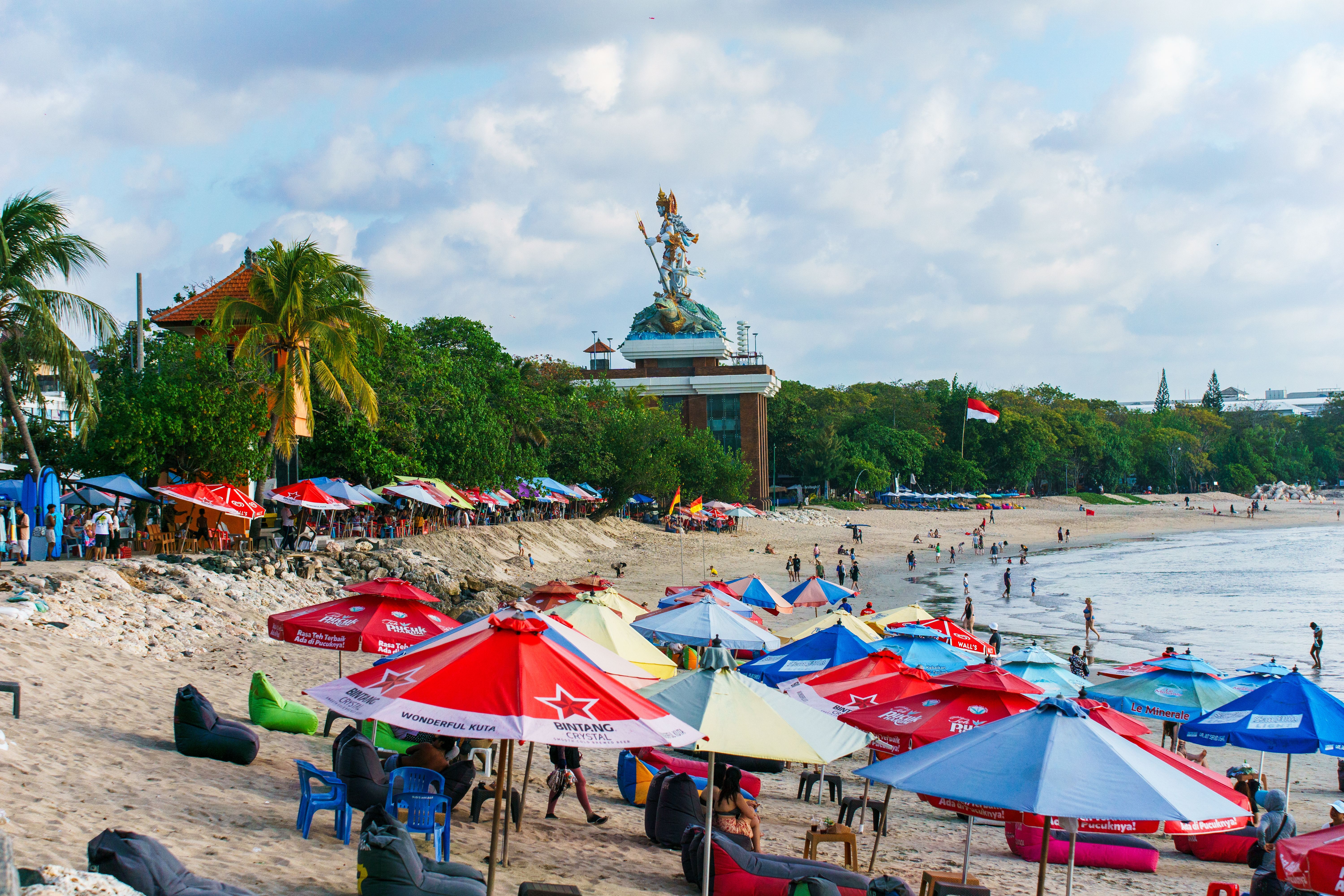
July: Beautiful Weather, Busy Bali
July is Bali doing what everyone imagines Bali does.
Blue skies. Sunny afternoons. Beach clubs. Surfboards. Sunsets.
July falls firmly within the dry season and is one of Bali's driest months.
The trade-off is simple: everyone else knows this too.
European summer holidays and school breaks bring significantly more visitors. Popular areas including Canggu, Seminyak and Uluwatu become noticeably busier, and accommodation prices can increase.
If July is when you can travel, absolutely come.
Just book the accommodation and experiences you really care about in advance.
August: Peak Dry Season
August usually brings some of Bali's coolest and least humid conditions of the year, while remaining warm enough for a proper tropical holiday.
For weather alone, it is excellent.
It's particularly good for:
- Beaches
- Surfing
- Hiking
- Diving
- Snorkeling
- Island hopping
- Long outdoor days
It is also peak season, so expect crowds in Bali's most famous destinations.
Our advice?
Don't spend your entire holiday bouncing between the same five Instagram-famous locations.
August is a brilliant month to explore areas such as East Bali, North Bali, Sidemen or quieter coastal villages alongside the famous spots.
September: Our Other Sweet Spot
September is the month we would quietly whisper to a friend who asked:
"Okay, but when should I actually go?"
You still have many of the advantages of Bali's dry season, while the July–August holiday rush begins to ease.
The sea is warm, outdoor activities are easy to plan and there is still plenty of sunshine.
September works especially well for couples, slower travellers and anyone wanting a balance between good weather and breathing room.
If May and June don't work for you, look at September.
October: Warm, Quieter and Beginning to Change
October sits at the other end of Bali's shoulder season.
The weather remains warm and there can still be plenty of sunshine, particularly early in the month, but showers become increasingly common as the rainy season approaches.
That shouldn't stop you from coming.
October can be excellent for mixing outdoor exploring with food, spas, temples, workshops and cultural experiences.
It is also a good reminder that you don't need 12 uninterrupted hours of sunshine every day to have a fantastic Bali trip.
November: The Rain Returns
November usually marks Bali's return towards wetter, more humid conditions.
Expect tropical showers and increasingly lush landscapes.
Outdoor plans may require a little more flexibility, so this isn't necessarily the month to build an itinerary where every day depends on perfect sunrise conditions.
Instead, slow it down.
Spend time in Ubud. Take a cooking class. Explore temples. Book a massage without feeling guilty about "wasting" a sunny afternoon. Have an unnecessarily long lunch overlooking a rice field.
This is another version of Bali, and we like her too.

December: Rainy Season Meets Peak Season
December is the strange one.
Weather-wise, Bali is in its rainy season.
Tourism-wise, Bali is in high season.
Christmas and New Year bring a major influx of visitors despite the increased chance of rain, particularly around popular southern areas. Accommodation and flights can become considerably more expensive during the festive period.
December can still be a wonderful time to visit, especially if you want restaurants, nightlife and a festive atmosphere.
Just don't book a Christmas trip expecting August weather.
So, What Is the Best Month to Visit Bali?
Here is how we would choose.
For the best overall balance:
May, June or September.
For the driest weather:
July and August.
For fewer crowds:
February, March, May, June, September and October, outside major holidays.
For waterfalls and green landscapes:
January to March.
For hiking and outdoor adventures:
May to September.
For surfing:
Conditions vary by coast and experience level, but the dry season is particularly popular for Bali's famous west and south coast breaks.
For a honeymoon:
May, June or September.
For Christmas and New Year:
December — but book early and expect rain as well as crowds.
One Important Thing About Bali Weather
Do not organise your entire trip around a weather-app icon.
Bali has mountains, coastlines and multiple microclimates. It can rain heavily in one part of the island while another area remains completely dry.
The rainy and dry seasons also shift slightly from year to year. Indonesia's meteorological agency, BMKG, monitors the actual onset of each season using rainfall patterns, and monthly conditions can vary from the historical norm.
So use the seasons as a guide, not a guarantee.
And during rainy season, don't assume a rain symbol means your whole day is ruined.
Tropical rain has a habit of arriving dramatically, making a lot of noise and then disappearing as if nothing happened.
Very Bali.
There Is More Than One Version of Bali
Dry-season Bali is golden sunsets, dusty roads, surfboards strapped to scooters and long days outside.
Rainy-season Bali is mist over the rice fields, roaring waterfalls, afternoon storms and every possible shade of green.
Neither one is the "wrong" Bali.
They are simply different.
So instead of asking only:
"When is the best time to visit Bali?"
Ask yourself:
"What kind of Bali do I want to experience?"
Once you know that, choosing your month becomes much easier.
Frequently Asked Questions
What is the rainy season in Bali?
Bali's wetter season generally runs from around November through April, although the exact start and end can vary from year to year. January and February are typically among the wettest months.
What is the dry season in Bali?
The main dry period generally falls around May to October, with July and August typically among the driest months.
What is the cheapest month to visit Bali?
Prices vary enormously according to flights, location and holidays, but periods outside the July–August and Christmas/New Year peaks generally offer better value. May, June and September can offer a particularly attractive compromise between weather and price.
Does it rain all day during Bali's rainy season?
Not necessarily. Bali often experiences intense tropical showers rather than nonstop rain, although prolonged wet periods can occur. Weather also varies significantly between different parts of the island.
Is Bali worth visiting in January or February?
Yes — particularly if beaches are not your only priority. These months are excellent for lush landscapes, waterfalls, wellness, food and cultural experiences. Just plan a more flexible itinerary.
What is the best month for a first trip to Bali?
For most first-time visitors, we would choose May, June or September because they offer an excellent balance of weather, activities and generally lighter crowds than peak July and August.
Planning your Bali trip?
Tell us when you're visiting, who's coming and what kind of experiences you're looking for. We'll help you make the most of whichever season you choose.
Talk to Us on WhatsApp